01Nearly a decade ago, nature tech was a half-page mention in a 2017 report. Today it is a global field of builders, buyers, investors, researchers and policymakers, and its tools to understand, measure, protect and value nature are maturing fast.
02But the field is fragmented. Its hardest problems lie in markets and in translation between buyers and builders, not in the technology, and capital rarely arrives in the order solutions need it.
03Emerging fields rarely organize themselves. Those that reach maturity, such as impact investing and palliative care, rely on an orchestrator: an entity that does the tenacious, underfunded work of aligning stakeholders and coordinating growth across the ecosystem.
04After five years of learning alongside our community, NTC will phase out its membership model in 2027 and become an ecosystem-wide field builder, acting as a neutral orchestrator for nature tech as a whole.
05This report assesses our work against a ten-step field-building playbook. No single organization can build a field, so we invite everyone working where nature and technology meet to build it with us in 2027.
01
From community to field
For five years, the Nature Tech Collective has acted as a catalyst for this young field. Working with our members and many others, we prototyped much of what it needs and learned what it still lacks most: a neutral orchestrator that serves the whole field and is beholden to none of its parts. Every company, investor and funder in nature tech has its own stake; the field also needs someone whose only stake is the field itself.
Nature Tech Week 2026.
“There’s been a huge amount of quiet enabling work to help this space exist at all.”
Field building is the long-term work of turning scattered activity into a functioning field. Within it sits a specific role, which we call orchestration: the work of keeping many actors aligned on a shared mission. Every emerging field depends on it.
Nature Tech Week 2026.
“We have been valuing nature, we’ve just been valuing it at zero in all of our decision making.”
people and organisations in the NTC ecosystem, across our channels and the Nature Tech Directory.
400+
Our flagship this year, the interactive Cattle Tech Sector Map 2.0, maps more than 400 entities offering technologies for more sustainable pasture-based and feedlot systems, from feed additives and methane monitoring to grazing management and virtual fencing.
<8¢
By 2025, according to Afloat, the sector was receiving just under 8 cents for every dollar invested in cleantech.
22
At this year’s UN biodiversity conference in Yerevan, 22 people from our community joined NTC’s delegation in the Blue Zone, where governments negotiate.
320+
Nature Tech Week 2026 brought more than 320 people from 250 organizations to the Unconference, alongside the Nature Action Dialogues with UNEP-WCMC and 13 partner-hosted satellite events.
80%
After the 2025 Unconference, 80% of attendees said it helped reduce duplicated effort, and 70% said it helped them find solutions to their own challenges.
1 / 6
03
The ten-step field-building playbook
Fields are rarely built by accident. This year we studied those who set out to build one deliberately, and a common sequence of ten steps emerged. We use it as a diagnostic: it shows where young fields tend to stall and puts NTC’s work in context.
2027 will be our first year as an organization that serves the whole nature tech ecosystem. No two fields have been built the same way, and we do not yet know the exact route nature tech will take. Our strength is being comfortable with that uncertainty: holding a complex, fast-moving, urgent field without forcing it into a fixed plan, and changing course as we learn what works and what does not.
Nature Tech Unconference 2025.
“Everyone is very relevant as a stakeholder in the ecosystem, and we’re all builders together.”
Gilad Goren, Executive Director, NatureX Foundation
How to work with us
Write to us at hello@naturetechcollective.org with an idea or a gap you see. We look forward to building this field with you.
“One can't help but wonder whether the emerging sector is rising to the occasion.”
2026 has been a tale of two nature tech sectors. There are more startups and solutions, more interested investors, more corporate nature leads, and more nature-positive political will than ever. On the other hand, a disturbing number of nature tech companies, project developers and dedicated NGOs have either shelved their work or closed up shop altogether. While turnover is expected and often actually a sign of a maturing ecosystem, one can't help but wonder whether the emerging sector is rising to the occasion.
Naturally, our own fledgling project, Nature Tech Collective, is attempting to make good on its own promise: to catalyze the adoption of technologies in service of the nature-positive transition. As with every other startup in our network, we test our assumptions, pivot where the evidence tells us to, and double down where the greatest potential shows. This report is, in part, an honest look at those choices, against a playbook for building fields.
2027 brings quite a bit of change in how NTC seeks to fulfill its ambition. We are phasing out our membership model and stepping into the role of a neutral orchestrator for the whole ecosystem. With her experience in building and activating communities, and her demonstrated dedication to the nature tech ecosystem, there is no one better than Community Lead Paige Perillat-Piratoine to lead NTC in the new direction, as our new Managing Director, a title she well deserves. I will remain active supporting Paige in this exciting new phase, while also focusing on related projects within the NatureX Foundation.
None of this happens without you. To our members, partners and funders, and to everyone who showed up, got involved, and co-created with us: thank you for your trust, your support and your active participation. Any achievements in pushing forward this field are due to you.
Paige Perillat-Piratoine
Managing Director, Nature Tech Collective
“In effect, this field is building itself, and our job is to make room for that work.”
Gilad asks whether this emerging sector is rising to the occasion. From the community side of the work, I can offer one piece of evidence.
Community building is hard to measure and the usual metrics fall short when what you are counting is connection. You showed us what our work was worth by what you asked us to build. You asked for the sector maps. You asked for a taxonomy. Each request pushed us past our original remit, from connecting people to serving the whole field. Writing this report, I laid those requests side by side and saw that they trace the steps of field building almost exactly. In effect, this field is building itself, and our job is to make room for that work.
That is the lesson I carry into the Managing Director role. A community lead is only as good as the people around them, and in nature tech those people are sharp, driven, and generous with their time. My view is widening from the community to the whole field, and I look forward to exploring it with you.
This is what a neutral orchestrator means to me: neutral ground, an honest reflection of what we see, and a willingness to act with you on what the field needs.
Thank you for telling us what this work means to you. Tell us what comes next, and we will double down with you in 2027.
From community to field
There’s been a huge amount of quiet enabling work to help this space exist at all.
Lucy Almond, Chair of Nature4Climate
For five years, the Nature Tech Collective has acted as a catalyst for this young field. Working with our members and many others, we prototyped much of what it needs and learned what it still lacks most: a neutral orchestrator that serves the whole field and is beholden to none of its parts. Every company, investor and funder in nature tech has its own stake; the field also needs someone whose only stake is the field itself.
That is the role we are now taking on. In 2027 we will phase out our membership model in favor of an ecosystem-wide approach.
The timing is right. Capital is starting to move, yet the people who need one another still struggle to meet.
A brief history of nature tech
Nature tech's history is shorter than many assume. At this year's Unconference, during our second Nature Tech Week, Nature4Climate chair Lucy Almond traced it for us. The term first appeared in a 2017 report from The Nature Conservancy, Lands of Opportunity, which made the case for private investment in nature-based solutions.
Tucked into its final pages sat half a page on an “emerging investment opportunity” called nature tech. At the time, Lucy recalls, it could name barely three companies.
NGOs and researchers, tired of waiting and of counting by hand, built ways to map forests and monitor species. Corporates and financial institutions watched from a distance, curious about nature yet unsure how to engage. For years, as Lucy puts it, the two worlds talked past each other.
Five years later, in 2022, Nature4Climate published the first dedicated report on the field. What You Can Measure, You Can Manage defined nature tech and organized it into four categories: Deployment, MRV, Transparency and Connection.
Our own story began around the same time, with a single question on a simple landing page: who is working on MRV, and who wants to collaborate? Almost as soon as it went live, eighty startups answered.
That response became the MRV Collective. It began as an experiment in what companies measuring nature could achieve together, and it grew organically, shaped by what its participants needed more than by a fixed plan. That early focus on measurement gave the field a practical, technical core to build from.
The depth of experience in that community allowed us to partner with Nature4Climate on a second, more practical report, The State of Nature Tech, on the size of the market and how startups were working with corporates.
Writing it changed how we saw our role. The field had plenty of energy but no mature marketplace, and we asked ourselves whether we could help it grow up faster. That meant widening our circle to everyone with a stake in nature tech, alongside the MRV companies we started with.
At the very beginning of 2024, the MRV Collective became the Nature Tech Collective, a formal membership for the Nature Tech Community to gather.
Over the next two years, we laid some of the foundations a field needs. We published the Nature Tech Taxonomy Framework with Impact Labs at COP16 in 2024 and launched the Nature Tech Directory in beta in 2025. That same year we hosted our first Nature Tech Week and Unconference.
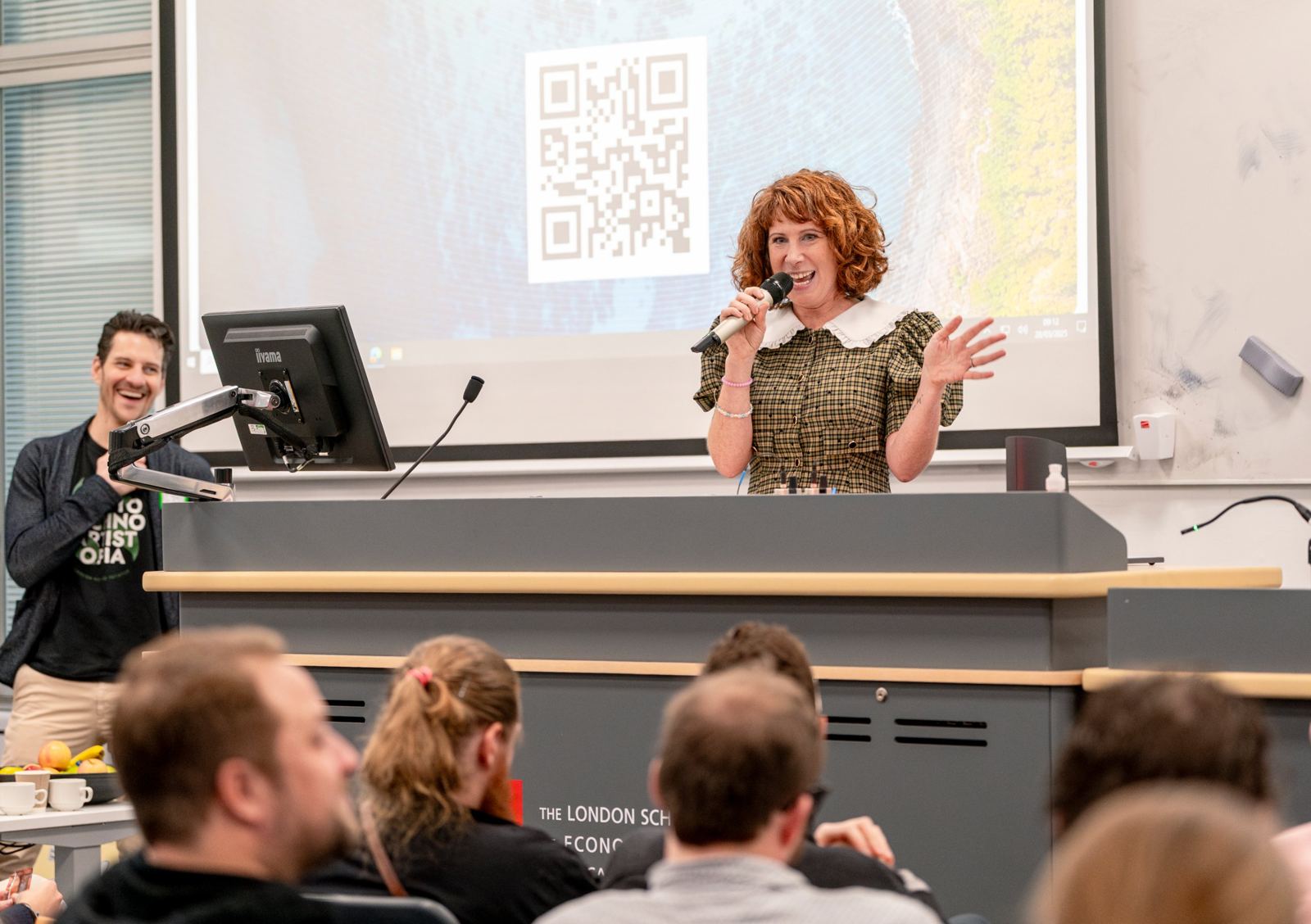
The second edition of Nature Tech Week, in 2026, drew around 400 applications for what was meant to be 200 places, and in September we took the format to Climate Week NYC as Nature in Practice.
Why we are moving away from a membership model
The need for sector-wide coordination has been clear since we began, and our members helped us meet it. They shared their work and their pivots, told us candidly what they need to flourish, shaped our agendas, co-created our convenings and represented us at COPs. Much of what we understand about this sector, we learned from them.
Together we built something beyond our 180-member community: legitimacy and trust across a far wider ecosystem. That is where our work mattered most.
A membership model pulls capacity toward individual organizations. It served an important purpose in the early stages, but the next phase requires a model designed to engage the whole ecosystem on more equal terms. An orchestrator has to stand in the middle, bringing startups, corporates, investors, funders, researchers and policymakers together on equal terms and speaking for the field rather than any one part of it. That requires full commitment to the field.
So we are phasing out our membership model. Programs developed with our members will stay open to everyone, and our focus will be the systems that help the whole field move forward.
Why a field needs an orchestrator
We have been valuing nature, we’ve just been valuing it at zero in all of our decision making.
Ben Goldsmith, Nattergal
Field building is the long-term work of turning scattered activity into a functioning field. Within it sits a specific role, which we call orchestration: the work of keeping many actors aligned on a shared mission. Every emerging field depends on it.
What the nature tech field is telling us
Afloat’s Naturetech Investment Report 2026, which builds on our taxonomy, describes a global but uneven market. Europe attracts most of the sector’s venture capital, and governments from Australia to Chile are writing nature into markets and regulation. Yet regulation has proven an unstable driver of demand. When Europe delayed and scaled back its disclosure and deforestation rules, investment cooled, and providers that did not rely solely on disclosure fared best.
The report also finds that buyers respond to risk more readily than to mission. Nature tech framed as protection against supply-chain risk wins budget; conservation pitches stall.
A second finding came from speakers at our 2026 Unconference: the field’s main obstacles are commercial, not technical. Acoustic sensors and environmental DNA are making nature far cheaper to monitor, but the tools still struggle to find markets and to be understood by the buyers who need them.
Both findings point the same way. The technology works, but most buyers and investors still treat nature tech as a nice-to-have rather than a must-have. The sector is investable and commercially proven in pockets, notably agriculture and MRV, yet lacks the institutional capital and category recognition that cleantech built over the past decade.
That recognition rarely comes from one company’s success. It grows from quiet enabling work: convening actors who would not otherwise meet, and helping buyers and investors see a coherent category where they once saw scattered tools.
Someone has to sustain that work.
That is the work of orchestration. Nature tech is a complex landscape: diverse actors pursue a systemic goal, and cause and effect often become clear only in hindsight. Like any living system, it needs tending. As orchestrator, NTC holds a shared view of the field and does the coordination that participants with a stake in the outcome are poorly placed to do. Our mandate is the field itself, not a product or portfolio of our own. Landscape practitioners call this governance infrastructure: a standing capacity to coordinate, decide, learn and adapt.
Why nature tech needs coordination now
Research on landscape partnerships shows that coordination matters most at the outset, when the work is convening, mapping stakeholders, building trust and defining the problem together. When that early phase is underfunded, participation stays weak and ownership never develops.
Nature tech is at that stage. It has a name and a founding body of knowledge, but no shared standards and no group of funders working to a common strategy.
The stakes are substantial. The venture-backed segment alone spans thousands of startups and investors, and venture investment grew roughly tenfold between 2016 and 2022 before a sharp correction. By 2025, according to Afloat, the sector was receiving just under 8 cents for every dollar invested in cleantech.
And capital struggles to reach where it is most needed. Startups that win early grants or pilot funding often stall before commercial scale, and fewer now progress from a first major venture round to a second. Project developers face a parallel missing middle. The capital exists but rarely arrives in the right sequence, and sequencing it is coordination work.
Why orchestration is worth funding
Coordination costs little next to the activity it catalyzes. In landscape partnerships, minimum viable governance costs a small fraction of the implementation spending it steers. Without it, trust erodes and resources are lost to duplicated effort.
Our own experience agrees. After the 2025 Unconference, 80% of attendees said it helped reduce duplicated effort, and 70% said it helped them find solutions to their own challenges. Nature Tech Week 2026 seeded new working groups, four of which have since launched under partner leadership.
The ten-step field-building playbook
This is an art, not a science, and a skill developed through practice.
The Many-to-Many System: Field Guide, on stewarding complex collaborations
Fields are rarely built by accident. This year we studied those who set out to build one deliberately, and a common sequence of ten steps emerged. We use it as a diagnostic: it shows where young fields tend to stall and puts NTC’s work in context.
The steps are not strictly sequential. Most efforts work on several at once, and mature fields loop back as conditions change. None of the successful cases treated field building as a campaign with an end date.
As you read the following, think about where your organization fits in these steps. It might be something you have learned that others could use, or a problem you'd like the field to help solve. Each step suggests ways to work together, and we're open to other ideas as well, however ambitious and out of the box they may be.
Step 1. Name and frame the field
Why it matters
Impact investing became a field once the Rockefeller Foundation gave it a name, at its Bellagio convenings in 2007 and 2008. Naming is the moment scattered activity recognizes itself as one thing.
What NTC did
The term nature tech came from others; our contribution has been to give it shape. In October 2024 we published the Nature Tech Taxonomy Framework. Where earlier reports offered a name and rough categories, the taxonomy gives the field a structured, shared vocabulary.
Without one, a business might describe its needs in terms of crop yields and disclosure, while a conservation NGO describes a closely related need in terms of ecosystem services and philanthropic grants. They could be describing the same landscape without recognizing it.
The taxonomy answers a practical question that existing frameworks rarely answered clearly: which tool fits my nature-related challenge, in my given location of focus? Its logic is simple: tool X (the tech lens) for challenge Y (the transition lens) in location Z (the nature lens).
The taxonomy has also begun to travel. Partners tell us they use our 5Ms to describe themselves or understand the field.
Where we could work together
The taxonomy began as a way to find solution providers for a given regional challenge. As the field has matured, the more important question has become how data and capital flow between its categories. If you work on or study a particular transition, such as agroforestry or grazing, we would like to explore it with you, whether by sharing what you see from your corner of the field or by co-developing an analysis that we share across our network. Thematic field builders, universities, consultancies and NGOs are especially well placed to lead this kind of work, and we would welcome a conversation with any of you to identify crucial leverage points in larger systemic subfields.
Step 2. Convene the founding actors and assign follow-through
320+
people
250
organizations
13
partner-hosted satellite events
Why it matters
Naming a field is only the beginning. Someone has to bring its organizations into sustained contact, then turn goodwill into accountable commitments before it dissipates. This is the step where initial enthusiasm either becomes a lasting community or fades.
What NTC did
Convening is NTC’s clearest strength. We first gathered the MRV community, then widened to all of nature tech. Our gatherings now bring together startups, corporates, investors, funders, researchers and policymakers, a mix few young fields achieve this early.
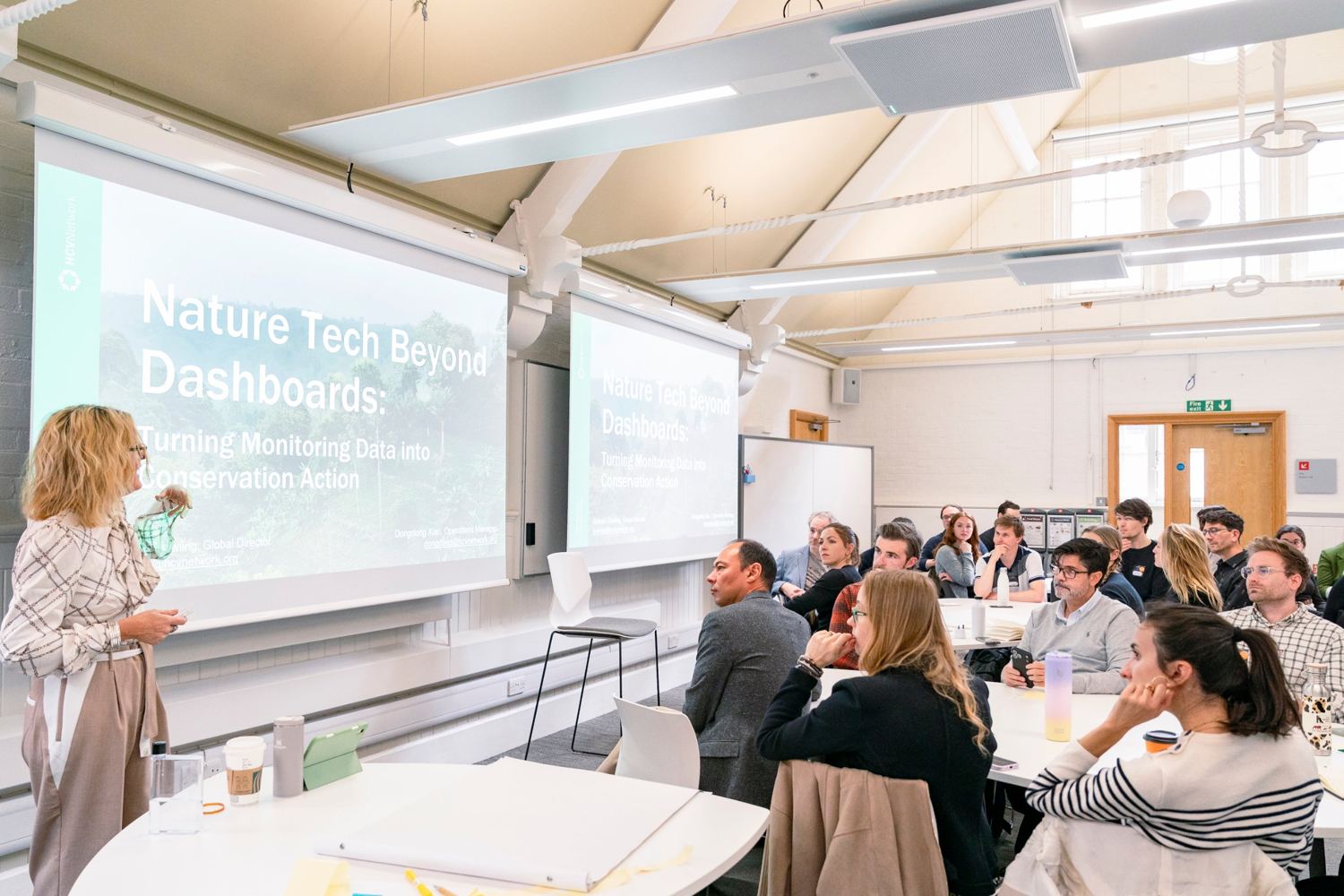
Nature Tech Week 2026 brought more than 320 people from 250 organizations to the Unconference, alongside the Nature Action Dialogues with UNEP-WCMC and 13 partner-hosted satellite events. Its conversations continued through new partner-led working groups, each planned to run for six months.
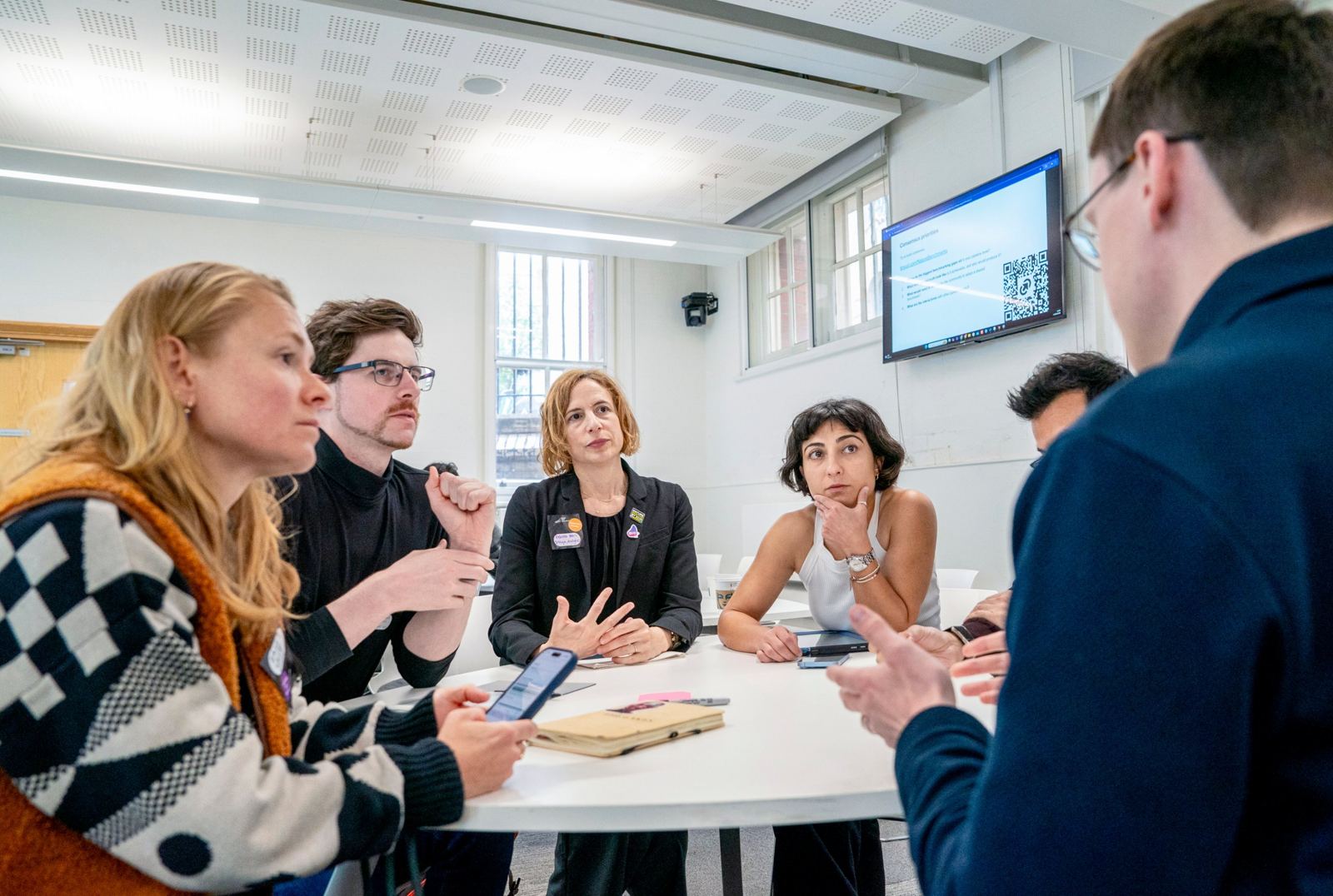
Along the way we arrived at a defining insight: our ecosystem does not want to be talked at. It wants to lead. The ecosystem now proposes and co-curates the sessions at every event we host. We call this approach Nature in Practice. At Climate Week NYC, where we introduced it under its new name, no single stakeholder group came close to a majority. It was the first time we saw the full, mixed ecosystem we have worked toward since the beginning.
Between gatherings, more than 11,000 LinkedIn followers and 4,000 newsletter subscribers keep the field’s vocabulary in circulation.
Where we could work together
Convenings can serve many purposes, from mapping a new problem to helping a coalition commit to a plan. Bring us a question worth gathering around, or invite us into your own event. When a conversation needs neutral ground, where organizations that rarely sit at the same table can speak openly, use ours. And if your work feels stuck in its own silo, draw on our view across the whole field to find partners and openings you might not have seen on your own.
Every mature field can point to research that explains what it knows and how it knows it. That evidence draws investment and earns legitimacy among established disciplines.
What NTC did
In 2026, our sector intelligence team wrote four reports, on top of the eight already in our library.
With the Amazon Investor Coalition, we published Technology & Trust in the Amazon, on how technology can build trust in carbon markets in the Brazilian Amazon. It maps the structural barriers that still hold those markets back, from land tenure to governance monitoring, then shows how in-situ and ex-situ tools can help answer the technical questions buyers scrutinize most.
We also responded to the policy calendar. For the 8th Global Policy Forum on Natural Capital, convened by the World Bank Group's Global Program on Sustainability, we produced Mapping the Natural Capital Technology Landscape: From Data to Decision-Making, a briefing and technology map of the tools that help governments and companies account for nature.
Our flagship this year, the interactive Cattle Tech Sector Map 2.0, maps more than 400 entities offering technologies for more sustainable pasture-based and feedlot systems, from feed additives and methane monitoring to grazing management and virtual fencing.
Nature Tech for Resilience: Crop Yield Optimization & Watershed Intelligence maps more than 300 companies building tools to measure and price the protection that healthy soils and ecosystems give farms against drought and other shocks. It finds crop innovation spanning biofertilizers to digital MRV platforms, while the burden of certification still stands between farmers and adoption. On water, it traces a shift from reacting to crises toward managing watersheds proactively.
Where we could work together
As a neutral intermediary, we can ask questions across organizations that would rarely compare notes directly. Tell us what knowledge you think is missing, and let's find a way to close that gap together, whether through a research question we take on with you or a round of interviews across the field. Whatever form it takes, we will publish what we learn so the whole field can build on it.
In time, informal convening has to grow into standing infrastructure that keeps actors connected between events as well as during them. Without it, every newcomer must rediscover who does what, and every buyer repeats the same due diligence.
What NTC did
The Nature Tech Directory, built with Impact Labs, now maps more than 900 organizations. It helps a corporate or investor with a specific need find relevant solutions, easing search costs and duplicated diligence across the market. Use is growing, and organizations now regularly ask to be listed. The Directory is still being refined, yet it is already proving its worth.
Behind it, we have built tools to keep it current. A scraper now handles much of the work of tagging and updating entries, so a small team can cover far more of the field.
Demo Days bring buyers and builders together around specific problems. Each themed session begins with a challenge raised by the corporate Nature & Biodiversity Peer Group, and startups show how they would meet it. In 2026 the sessions ranged from supply chain traceability to nature metrics for management. Live questions surface the objections a polished case study would hide, so each session doubles as market intelligence for both sides.
Between larger gatherings, the Nature Tech in Action series keeps the field in regular contact. Live webinars put practitioners in front of buyers and investors, and the case studies that follow, mapped to the 5Ms, leave a lasting record of who is doing what.
Where we could work together
We built the Directory as a prototype, and it has shown it can be useful to the sector. Turning it into a long-term, dependable infrastructure will take more resources and more expertise than we have alone. We would welcome people who have built data platforms or directories before to help us rethink it, from data quality and verification to testing with real buyers. We are also open to sharing the data through APIs with platforms whose users could benefit from it, and to raising funds together so this infrastructure is built with the rigor it needs.
Fields sustain themselves by training and surfacing the next generation of practitioners. A sector that cannot find or grow its talent eventually stalls, however strong its ideas.
What NTC did
Our first contribution has been to make expertise visible. Our blog and AMA series give practitioners a platform for knowledge that usually stays inside one organization, as in recent conversations with the Arbor Day Foundation on financing forests with catalytic capital, and with Echo Labs on building an “ecosystem fingerprint” to make ecological condition predictable.
This matters for talent because a young field must first become legible. People arriving from adjacent fields need to see what the work involves and who does it well. Each AMA turns tacit know-how into a shared resource: newcomers find a way in, and employers gain a clearer view of who knows what.
We have also begun contributing to other organizations' training programs. In 2026 we spoke at Climate Collective's AI x Nature accelerator, a program that helps founders applying AI to biodiversity and nature challenges refine their go-to-market strategy and become investor-ready. Entrepreneur support organizations like Climate Collective meet founders as their companies take shape, which makes them one of the most direct routes into the field's talent pool.
University ties are beginning to grow through our events. LSE Generate, the London School of Economics' entrepreneurship hub, has supported the Nature Tech Unconference for two years running, alongside the Global School of Sustainability.
Where we could work together
Entrepreneur support organizations shape founders at their most formative stage, often before they have settled on a market or a first customer. In a sector this uneven, where demand and capital vary widely by region and segment, that is when the right guidance saves the most time.
If you run an accelerator or other founder program and want to understand nature tech better, let’s think together about what would help. We’re here to share our knowledge, speak to your cohorts and shape curriculum, and even make connections.
A field crosses a threshold of credibility once it has agreed measurement standards that let outsiders compare its actors. Without them, its data remains anecdotal, however much research it publishes.
What NTC did
NTC does not set standards, nor should it. Our role is to convene the conversations where standards are tested and to connect the efforts developing them.
Our webinars regularly feature companies applying frameworks such as the Nature Positive Initiative's State of Nature Metrics, exploring where implementation gets hard and which technologies make reporting feasible. They also make room for critique: some participants argue current frameworks fall short of protecting nature, while others find the most rigorous approaches lack a business case. We will keep hosting that debate.
Where we could work together
Standards for nature tech can mean several things. Where we see the clearest opening for NTC is in showing how well a tool measures what it claims to. This layer is specific to nature tech and largely missing. A shared way to state what level of claim a dataset can support would allow buyers to compare tools on equal terms and strengthen the credibility of the field. It is a pre-competitive question, well suited to convening and to shared infrastructure, and one we have begun to explore as a possible layer of the Directory. If you're interested in this project, reach out.
Step 7. Bring funders together and match capital to the field
Why it matters
Coordinated funding from many sources gives a field far more staying power than any single sponsor can. Its capital structure must also fit the sector's own economics, rather than being borrowed wholesale from an adjacent sector with different risks and returns.
What NTC did
Most of our funding work is building relationships and sharing what we see, and it serves the field more than NTC itself.
With philanthropic foundations, our priority has been to inform. Many are reorganizing toward joint, more systemic strategies, and we share the leverage points we see so they can spot where coordinated money would matter most.
With investors, we are mapping the venture firms active in nature tech, and learning where venture capital fits and where another kind of capital would serve a startup better.
Where we could work together
We are drafting guidance on which type of funding fits which type of nature tech project, a question that puzzles stakeholders across the field.
Beyond that, the field needs a financial backbone: a hub that maps relevant forms of capital for a given landscape and sequences it by stage. That sequencing is increasingly global. Early-stage venture capital remains concentrated in Europe and North America, while later-stage capital to scale proven technologies may increasingly come from elsewhere, including Asia Pacific and Canada. Before defining our place in this, we want to understand the funder coordination already underway. A first sketch of capital sequencing for one or two landscapes would make the idea concrete and we welcome partners that may want to explore this with us.
We will also diversify NTC’s own funding. Field building and convening are recurring costs, and we plan to raise for them directly, to cover core operations and run more rigorous, better-resourced convenings.
We would like to talk with funders about what it would take to build a funder collaborative for nature tech: a group of funders pooling resources behind a shared strategy for the field. We would also like to hear from organizations doing work similar to ours, about how we might host those conversations together and, in time, build such a collaborative as partners.
Mature fields connect to policy in two ways: they shape the rules that create demand, and they earn recognition as a distinct field that public money can support. Palliative care did both. With policy work backed by the Robert Wood Johnson Foundation, it helped expand the Medicare hospice benefit and became a recognized clinical specialty.
What NTC did
Much corporate demand for nature tech flows from disclosure and target-setting, so our main policy channel today is on the demand side. NTC sits on the Leadership Group of Business for Nature, the coalition’s decision-making body, carrying nature tech’s voice where business positions on nature policy take shape.
We also bring nature tech into the negotiations. At this year’s UN biodiversity conference in Yerevan, 22 people from our community joined NTC’s delegation in the Blue Zone, where governments negotiate. Being in that room is a first step toward the second kind of policy connection: recognition as a field in its own right.
Where we could work together
That recognition is still missing, and in 2026 we saw firsthand what this absence costs. Because nature tech spans agritech, MRV, biotech and fintech, public innovation budgets such as the UK’s now fund it in fragments (if at all) and in the United States the agency closest to its needs faces deep proposed cuts.
We would like to make the case for nature tech as a field in its own right, and we cannot make it alone. If you run a public innovation program, we would welcome the chance to show you how the field fits together and where support would go furthest. If your organization works on policy, or has felt these gaps directly, we would value your evidence and your voice.
The strongest field-building efforts review their own work honestly and act on what they find.
What NTC did
We have changed course more often than held it. A loose network of measurement startups became the Nature Tech Collective, and this year we decided to phase out our membership model. Along the way we dropped formats that did not work and reinvented others, each time because we were honest about what wasn’t working.
Still, we do not yet practice self-critique in the playbook’s sense. Our community reports reflect on what NTC has achieved, and our sector intelligence surfaces the field’s gaps, but neither is a critical review of NTC as a field builder. That is understandable: this is the first report in which we describe ourselves that way.
Where we could work together
We want review to be continuous rather than occasional, and we would like you involved in both directions.
Looking outward, we hope to revive The State of Nature Tech as an annual view of how the field is evolving and how far it has come. If your organization holds data on the sector, or would like to co-author an edition, we would like to hear from you.
Looking inward, from next year our end-of-year report will include a candid review of NTC’s own field-building work. Tell us where we fall short whenever you see it, and help us organize future public field-building roadmap workshops to shape what we do next.
Eventually, a field-building organization must hand what it has built back to the field itself. Done well, this happens on a plan rather than through an abrupt withdrawal that destabilizes the very field it set out to strengthen.
Rockefeller's exit from impact investing is the reference case. Once the GIIN had independent leadership, the foundation moved from principal convener to a seat on its board, and in 2013 it closed its dedicated impact investing practice. The hand-off was gradual and planned, and the network has outlived the foundation's direct involvement.
What NTC did
Hand-off is not yet a live question for us. Several earlier steps must mature first, and precedents suggest field building runs six to fifteen years before ownership can shift.
But in 2026 we made our first deliberate move toward a field that owns its infrastructure: phasing out our membership model. It turns NTC from an organization with a defined membership into a mission space, where the mission holds steady while contributors flow in and out, and what we build belongs to the field rather than to a subscriber base.
Where we could work together
We do not expect to step back soon, but every partnership we form will begin with one question: who should own this once it works? If your organization could one day hold part of the field’s shared infrastructure, such as the taxonomy or the Directory, we would like to start that conversation now.
Importantly, we aim to design for hand-off from the start, building shared stewardship into each piece of infrastructure as it matures.
Everyone is very relevant as a stakeholder in the ecosystem, and we’re all builders together.
Gilad Goren, Executive Director, NatureX Foundation
2027 will be our first year as an organization that serves the whole nature tech ecosystem. No two fields have been built the same way, and we do not yet know the exact route nature tech will take. Our strength is being comfortable with that uncertainty: holding a complex, fast-moving, urgent field without forcing it into a fixed plan, and changing course as we learn what works and what does not.
We invite you to learn with us what it will take to build this field, and to act on what we learn together.
In 2027
Much of what works will continue. Nature in Practice will keep bringing the field together, and our programs remain open to everyone. Our working groups will carry on, and new ones can form wherever a conversation deserves to continue.
Alongside them, we hope to begin several new threads, resourced in collaboration.
How to work with us
Share what you know. Much of the field's most valuable knowledge still sits inside single organizations. Bring it into the open through our written series, a case study, or a landscape map of your segment of nature tech.
Show us the gaps. Tell us where tools fail to meet buyers’ needs and where capital stalls. The challenges you evidence will shape our research agenda and, we hope, the next edition of The State of Nature Tech.
Convene with us. Co-host a gathering, propose a session, or lead a working group.
Bring the right people to the table. Adoption of nature tech depends on decision makers who rarely meet the people building it: buyers, investors, regulators and community leaders. Help us bring that leadership into the room, so that together we can reliably measure, report on and restore the health of landscapes and seascapes.
Imagine with us. Whether you can contribute research, data, expertise, funding or institutional support, there is a role to play in building this field. We want to work with organizations that see the value of shared infrastructure and collective action, and are willing to help make it happen. Bring us an idea, a challenge or a resource you can contribute, and let's explore what we can build together.